
Social Commerce & Shopable Content
How It’s Changing the Buying Funnel
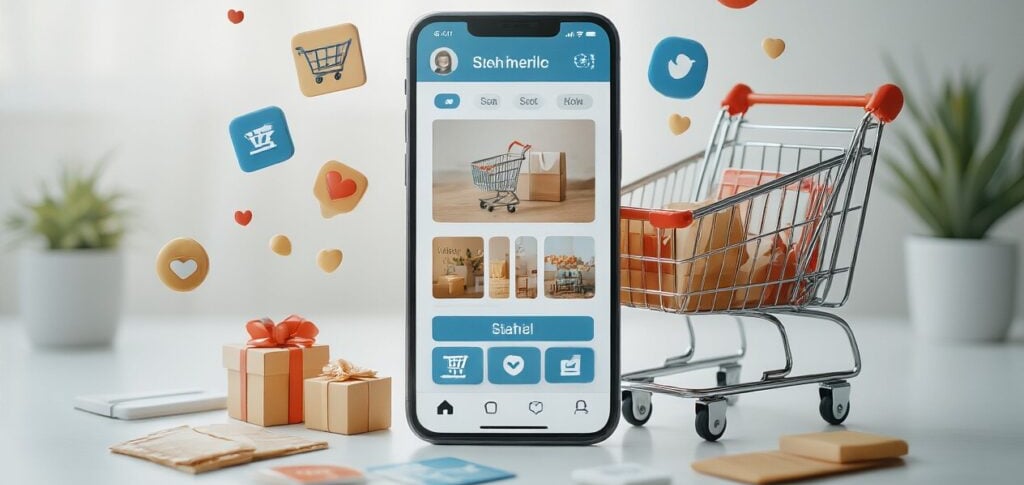
Social Commerce & Shopable Content: How It’s Changing the Buying Funnel
In the last few years, social media has evolved far beyond likes, shares, and comments. Platforms once meant for entertainment and connection have become bustling marketplaces — where inspiration, discovery, and purchase all happen in the same scroll. Welcome to the era of social commerce, where the traditional buying funnel is being turned on its head.
From Awareness to Checkout — Without Leaving the Feed
The classic marketing funnel once looked like this: Awareness → Interest → Consideration → Purchase.
Each step was distinct, requiring a user to move from one platform to another — from an Instagram ad to a website, then to a checkout page.
Now? It’s one seamless swipe.
With shoppable posts, live-commerce features, and in-app payments, the buyer’s journey is collapsing into a single platform. Whether it’s an Instagram Reel featuring “Tap to Shop,” a Pinterest pin linked to a buy-now button, or a TikTok creator demoing a product with a checkout link — consumers can complete their journey in seconds.
This shift blurs the lines between content and commerce, making engagement the new entry point to sales.
The Psychology Behind the Shift
Why is social commerce so powerful? Because it aligns with modern buyer psychology.
Trust through familiarity: People already trust the influencers, brands, and communities they follow.
Instant gratification: The fewer clicks it takes to buy, the more likely consumers are to complete a purchase.
Emotional storytelling: Videos, reviews, and user-generated content create emotional context that static e-commerce sites rarely deliver.
Social proof: Seeing others interact, comment, or buy builds credibility and urgency.
In essence, consumers aren’t being sold to — they’re participating in the experience.
Platforms Leading the Revolution
Each social platform is carving its niche in this revolution:
Instagram & Facebook: Meta’s ecosystem offers fully integrated shops, in-app checkout, and product tagging in posts, stories, and reels.
TikTok Shop: One of the fastest-growing platforms for impulse purchases, combining entertainment and e-commerce in addictive short-form video.
Pinterest: A visual search engine turned shopping assistant — ideal for discovery and high-intent purchases.
YouTube Shopping: Creators can now tag products directly in videos, making long-form content equally shoppable.
These platforms are no longer just ad spaces — they’re digital storefronts.
How It’s Reshaping the Marketing Funnel
In the age of social commerce, the traditional linear funnel is evolving into a circular ecosystem — one where content creates awareness, engagement drives conversion, and community sustains loyalty.
Old Funnel
New Social Funnel
Awareness → Interest → Decision → Purchase
Discovery ↔ Engagement ↔ Conversion ↔ Advocacy
Now, customers don’t just buy once — they become micro-influencers, sharing and resharing purchases, driving new awareness organically.
The Role of Shopable Content
Shopable content bridges entertainment and transaction. It can take many forms:
Tagged posts with direct product links
“Swipe-up to buy” stories
Live-shopping events
Interactive videos where viewers can click items
Creator collabs featuring exclusive product drops
Brands that master this blend of storytelling and instant action are seeing record-high engagement and conversion rates.
Why Businesses Should Care — Especially Small Ones
Social commerce isn’t just for big brands. For small and medium businesses, it’s a cost-effective way to:
Reach niche audiences through influencer collaborations
Reduce friction in the buying process
Collect real-time feedback through comments and reactions
Build communities around lifestyle and shared values
The key? Authenticity.
Over-polished ads don’t convert as well as genuine, relatable, human content.
Future of Social Commerce: AI, AR & Personalisation
The next phase of social commerce will be powered by AI recommendations, AR try-ons, and predictive engagement.
Imagine virtual mirrors, AI-driven product suggestions, and voice-enabled shopping directly inside social apps.
The future buyer journey won’t just be shorter — it will be smarter.
Final Thoughts
Social commerce is no longer the future — it’s the present tense of marketing. The brands that win are those that stop treating social media as a broadcast channel and start using it as an experience engine — where storytelling, community, and shopping merge into one fluid ecosystem.
The new buying funnel isn’t about pushing products — it’s about creating moments worth buying into.